



 Package tour
List of famous historical sites in Hanoi
Hanoi, the thousand-year-old capital of Vietnam, is not only the political, economic, and cultural center of the country but also a living museum that preserves the heroic historical imprints of the nation. Every street, ancient house, and monument in Hanoi carries its own compelling stories, contributing to the rich cultural tapestry of the capital.
If you are planning a trip to explore Vietnam's heritage, here is the ultimate list of famous historical sites in Hanoi that you cannot afford to miss.
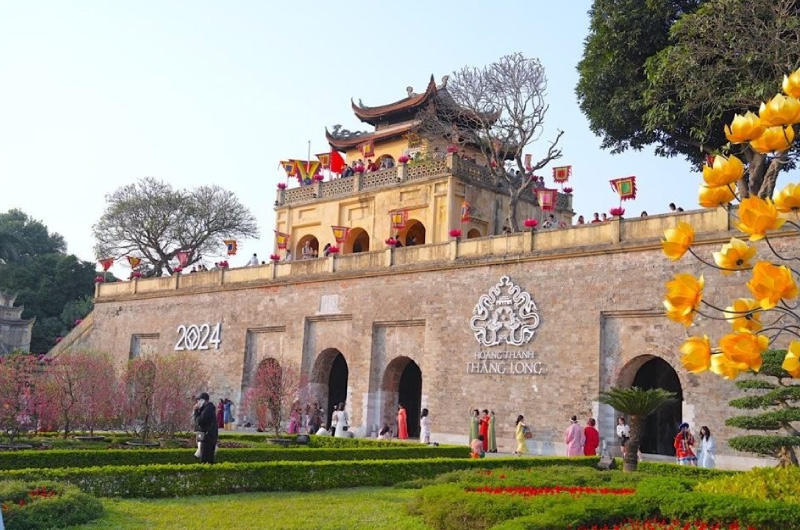
1. Imperial Citadel of Thang Long – The Mark of the Dai Viet Empire
Recognized as a UNESCO World Cultural Heritage Site in 2010, the Imperial Citadel of Thang Long is an extraordinary complex associated with the history of Thang Long – Hanoi. Built in the 11th century by the Ly Dynasty, it served as the political center of regional power for over thirteen centuries.
Walking through its ancient grounds, you can admire archaeological treasures, the iconic Flag Tower of Hanoi, and Kien Trung Palace. It stands as a testament to the development of the Dai Viet Empire through successive dynasties and symbolizes the indomitable spirit of the Vietnamese people.
-
Address: 19C Hoang Dieu Street, Ba Dinh District, Hanoi
-
Opening Hours: 8:00 AM – 5:00 PM
- Get Directions:
View on Google Maps
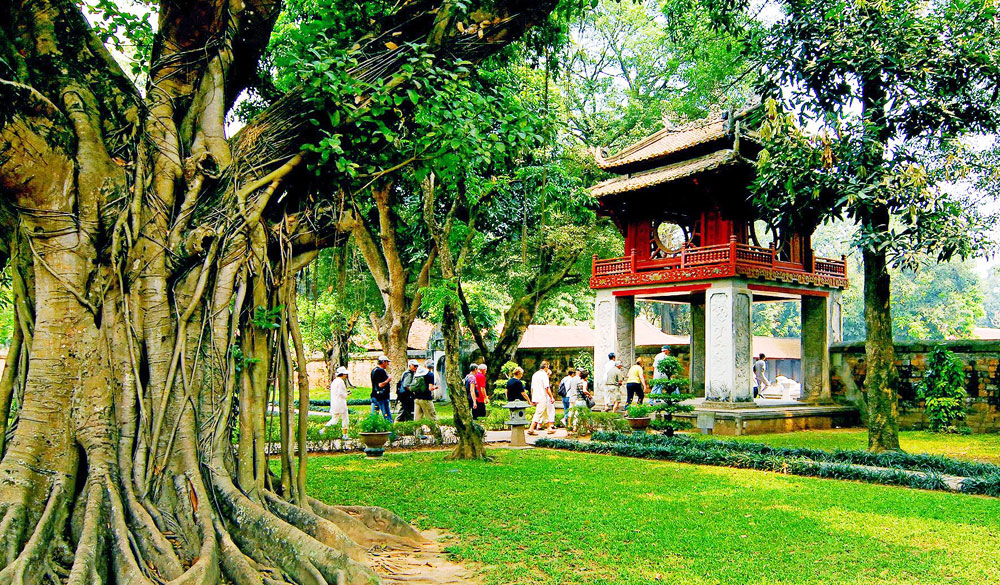
2. Temple of Literature (Van Mieu - Quoc Tu Giam): Symbol of Vietnamese Wisdom
Built in 1070 under King Ly Thanh Tong, the Temple of Literature (Van Mieu) was established to honor Confucius and ancient scholars. In 1076, Quoc Tu Giam was founded within its grounds as Vietnam's very first university.
The site is a magnificent representation of traditional Vietnamese architecture, featuring serene courtyards, the iconic Khue Van Cac pavilion, and the Well of Heavenly Clarity. The highlight for history lovers is the 82 Stone Stelae of Doctors, erected on the backs of stone turtles to record the names and homelands of royal exam graduates, recognized by UNESCO as World Documentary Heritage.
-
Address: 58 Quoc Tu Giam Street, Dong Da District, Hanoi
-
Opening Hours: 8:00 AM – 5:00 PM
- Get Directions:
View on Google Maps
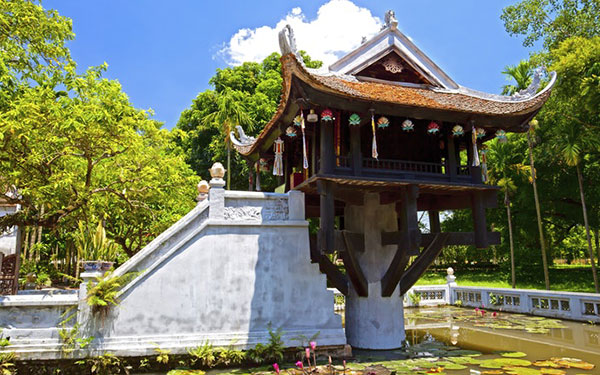
3. One Pillar Pagoda: Architectural and Spiritual Masterpiece
The One Pillar Pagoda (Chua Mot Cot or Lien Hoa Dai) is one of Vietnam's most iconic spiritual and architectural landmarks. Built in 1049 under Emperor Ly Thai Tong, its design was inspired by a dream in which the Bodhisattva Avalokiteshvara handed the King a baby boy while seated on a floating lotus blossom.
The entire wooden pagoda rises gracefully from a single stone pillar resting in the middle of a lotus pond, symbolizing purity and nobility in Buddhism. It remains an active place of worship and a unique masterpiece of medieval Asian design.
-
Address: Chua Mot Cot Street, Ba Dinh District, Hanoi
-
Opening Hours: 7:00 AM – 6:00 PM
- Get Directions:
View on Google Maps
4. Hoa Lo Prison Relic - Historical Witness of the Resistance
Known sarcastically as the "Hanoi Hilton" by American POWs, Hoa Lo Prison was originally built by French colonialists in 1896 under the name Maison Centrale. It was designed to incarcerate Vietnamese political prisoners and revolutionary fighters.
Today, the preserved museum complex offers a poignant look into the nation's struggle for independence. Visitors can walk through the dark dungeon cells, view original guillotine equipment, and read moving accounts of the resilience and sacrifice displayed by Vietnamese patriots.
-
Address: 1 Hoa Lo Street, Hoan Kiem District, Hanoi
-
Opening Hours: 8:00 AM – 5:00 PM
-
Get Directions:
View on Google Maps
5. Ngoc Son Temple and The Huc Bridge
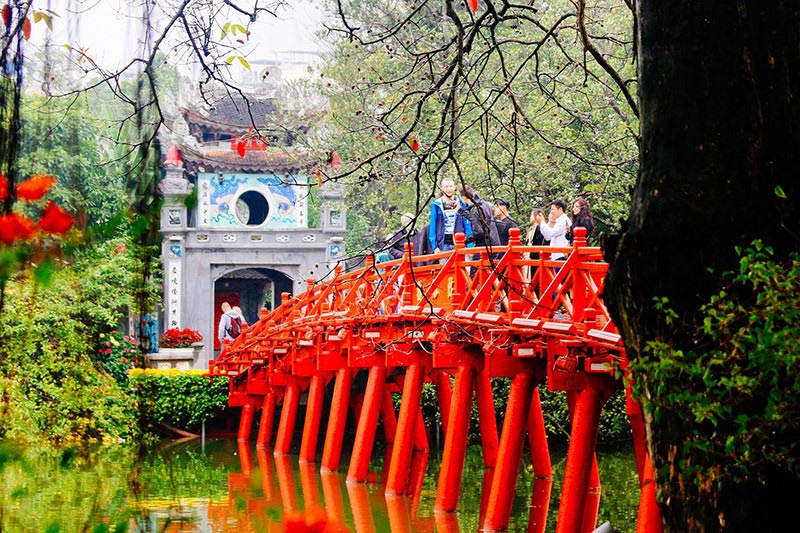
Perched on Jade Island inside the legendary Hoan Kiem Lake (Lake of the Restored Sword), Ngoc Son Temple (Temple of the Jade Mountain) was built in the 19th century. The temple honors Tran Hung Dao, the national hero who defeated the Mongol invasions, alongside Taoist and Confucian deities.
To reach the temple, visitors walk across The Huc Bridge, a striking, red-lacquered wooden bridge whose name translates to "Morning Sunlight Bridge." Together with the nearby Turtle Tower, this complex forms the romantic heart of Hanoi's scenic identity.
-
Address: Dinh Tien Hoang Street, Hoan Kiem District, Hanoi
-
Opening Hours: 7:00 AM – 10:00 PM
-
Get Directions:
View on Google Maps
6. Hanoi Old Quarter - Where the Old Soul of the City Lives
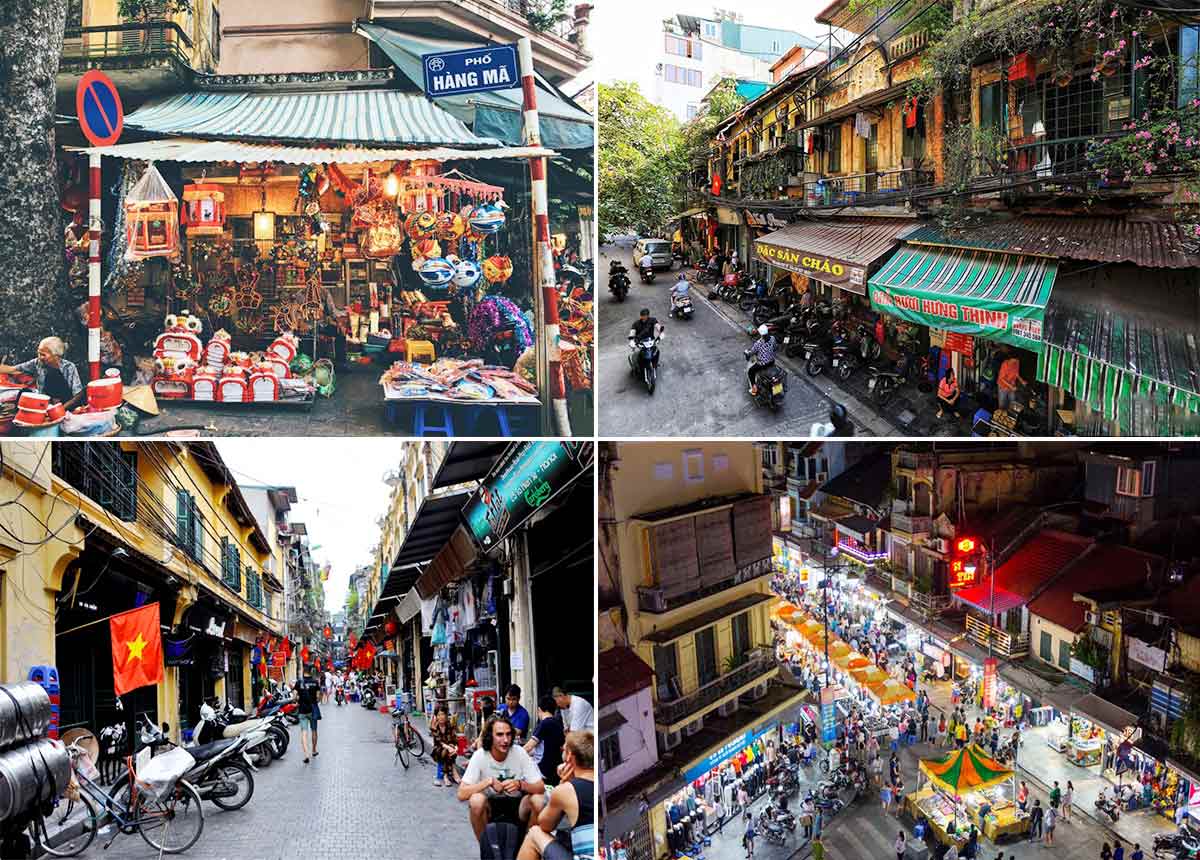
Spanning 36 historic streets, the Hanoi Old Quarter (Pho Co Hanoi) has been the commercial heart of the capital since the 11th century. Each street was historically named after the specific craft or trade practiced there, such as Hang Bac (Silver Street) or Hang Gai (Silk Street).
Wandering through its maze of narrow streets reveals colonial-era French architecture, traditional tube houses, hidden temples, and vibrant street markets. It is an extraordinary open-air living museum where centuries-old traditions flourish alongside modern urban life.
-
Address: Hoan Kiem District, Hanoi
-
Get Directions:
View on Google Maps
7. Tran Quoc Pagoda: The Oldest Temple in Hanoi
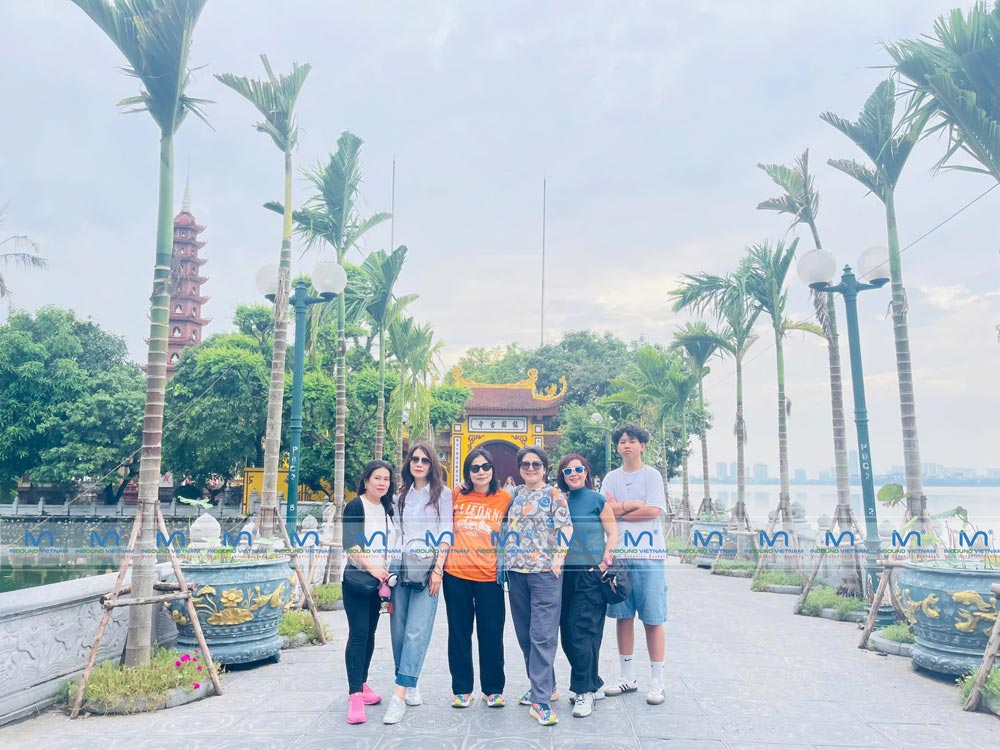
Situated on a tranquil islet on the eastern shore of West Lake (Ho Tay), Tran Quoc Pagoda is the oldest Buddhist temple in Hanoi, with a history spanning over 1,450 years. Originally constructed in the 6th century during the reign of Emperor Ly Nam De, it was later relocated to its current site in the 17th century.
The pagoda is famous for its striking 15-meter-high red stupa (Bao Thap), which houses sacred relic statues on each of its 11 tiers. Surrounded by calm waters and ancient Bodhi trees—one of which was gifted by the President of India in 1959—it is a serene spiritual sanctuary.
-
Address: Thanh Nien Road, Tay Ho District, Hanoi
-
Opening Hours: 7:30 AM – 11:00 AM & 1:30 PM – 5:00 PM
-
Get Directions:
View on Google Maps
8. Co Loa Citadel Relic
Located about 16 kilometers northeast of central Hanoi, Co Loa Citadel is the oldest fortified city in Vietnam, serving as the capital of the Au Lac Kingdom under King An Duong Vuong in the 3rd century BCE.
The citadel is famous for its unique spiral design, originally consisting of three concentric earthwork ramparts defended by deep moats. Today, visitors can explore ancient temples, royal shrines, and archaeological sites that hold deep roots in Vietnamese mythology, including the legend of the Magic Crossbow.
-
Address: Co Loa Village, Dong Anh District, Hanoi
-
Opening Hours: 7:30 AM – 11:30 AM & 1:30 PM – 5:30 PM
-
Get Directions:
View on Google Maps
9. Ho Chi Minh Mausoleum
Situated in the center of historic Ba Dinh Square—where President Ho Chi Minh read the Declaration of Independence on September 2, 1945—the Ho Chi Minh Mausoleum is the final resting place of Vietnam's beloved national leader.
Built with granite and marble sourced from across Vietnam, the monumental structure is an important pilgrimage site for locals and international visitors paying their respects. The surrounding complex includes the Presidential Palace, Uncle Ho's Stilt House, and serene lotus gardens.
-
Address: 1 Hung Vuong Street, Ba Dinh District, Hanoi
-
Opening Hours: 7:00 AM – 11:00 AM (Closed on Mondays and Fridays; seasonal variations apply)
- Get Directions:
View on Google Maps
10
The Thang Long Tu Tran refers to four sacred temples built to guard the four cardinal directions (East, West, South, North) of the ancient capital against evil spirits and external threats:
-
Bach Ma Temple (East): Guards the east of the citadel; dedicated to the White Horse deity who guided King Ly Thai To in building the city walls.
-
Address: 76 Hang Buom Street, Hoan Kiem District |
-